

You’ve probably seen the word Aagmqal floating around productivity blogs, personal development forums, or organizational leadership discussions — and wondered what it actually means. You’re not alone. Despite its growing presence online, most articles give you a surface-level definition without any real depth or practical direction. That ends here.
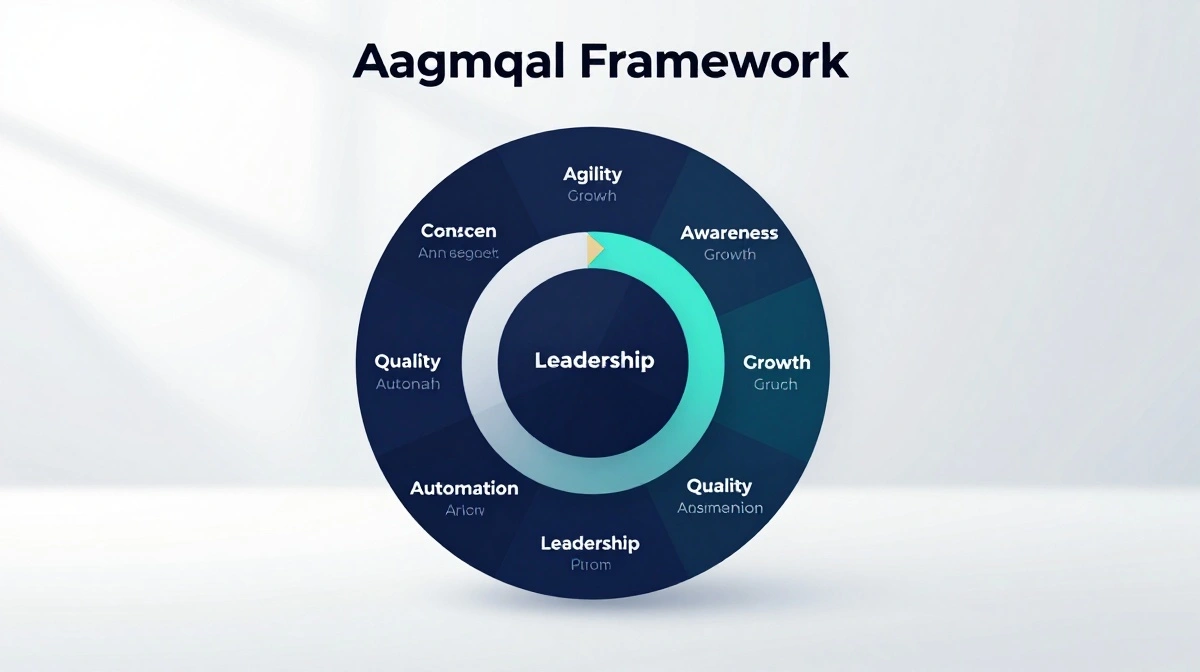
Aagmqal is a structured, flexible framework that blends agility, awareness, growth, management, quality, automation, and leadership into one coherent approach to personal and professional development. Whether you’re an individual trying to build better habits or a team leader looking to scale sustainably, understanding Aagmqal can fundamentally shift how you think, work, and grow.
What Exactly Is Aagmqal and Why Does It Matter
Aagmqal is best understood as a mindset framework — not a rigid doctrine, not a passing trend, and not simply a spiritual ritual, though it draws from ancient communal traditions. At its core, it represents a structured yet adaptive system that helps people grow with intention rather than by accident.
The term itself is often interpreted as an acronym that spans agility, awareness, growth, management, quality, automation, and leadership — seven interconnected pillars that together create a unified philosophy of balanced progress.
What makes Aagmqal stand apart from other self-help frameworks is its insistence on integration. Rather than treating productivity, wellness, leadership, and reflection as separate domains, it brings them under one coherent lens.
Anyone experiencing chronic burnout, scattered focus, or stalled personal development will find that Aagmqal provides exactly the kind of structured clarity they’ve been searching for.
The Origins and Historical Roots of Aagmqal
The history of Aagmqal stretches back further than its current digital popularity suggests. Historically, the practice originated in ancient communal settings where rhythmic chants, intentional physical postures, and group alignment periods were used to foster unity, shared purpose, and resilience within communities.
Elders guided these gatherings, emphasizing that individual growth and collective well-being were inseparable. Over centuries, these rituals evolved and adapted as civilizations changed, trading floors replaced communal fires and boardrooms replaced village circles — but the underlying philosophy survived.
Modern scholars and practitioners have reinterpreted those ancestral roots into a contemporary framework that is equally applicable in personal development, startup culture, education, and organizational management.
The correct phonetic pronunciation is “Ahg-muh-kahl,” with emphasis on the first and last syllables — a small detail that reflects the deliberate, balanced quality embedded in its very name.
The Seven Core Pillars That Define Aagmqal
Understanding Aagmqal at a deeper level means understanding its seven foundational pillars and how they interact. The table below breaks down each pillar with its role and practical application:
| Pillar | Core Role | Practical Application |
|---|---|---|
| Agility | Rapid adaptation to change | Adjusting strategies when circumstances shift |
| Awareness | Honest self-assessment | Weekly reflection on habits and decisions |
| Growth | Continuous improvement mindset | Setting measurable learning goals each month |
| Management | Organizing priorities and resources | Building structured daily and weekly routines |
| Quality | Maintaining high standards consistently | Reviewing output before finalizing any project |
| Automation | Reducing repetitive cognitive load | Using tools to handle recurring low-value tasks |
| Leadership | Guiding self and others with clarity | Making decisions aligned with long-term values |
Each pillar reinforces the others. Agility without quality leads to careless speed. Quality without automation leads to unsustainable perfectionism. When all seven operate together as one system, practitioners experience the kind of clarity and consistent output that most productivity frameworks fail to deliver on their own.
Common Misconceptions People Have About Aagmqal
One of the biggest barriers to adopting Aagmqal is the cloud of misconceptions that surrounds it. The most common myth is that Aagmqal is exclusively a spiritual or religious practice.
In reality, it is entirely secular in its modern form. While its origins are rooted in ancient communal rituals, today’s framework functions as a pragmatic system for personal performance and organizational development.
Another widespread misunderstanding is that Aagmqal requires significant prior knowledge or specialized training before you can begin. That assumption stops many people before they even start, which is a shame, because the framework is deliberately designed to be accessible at any experience level.
A third misconception is that it applies only to large organizations or corporate teams. Aagmqal is equally effective for a college student managing coursework, a freelancer juggling clients, or a parent building healthier household routines.
The Proven Benefits of Practicing Aagmqal Consistently
The benefits of Aagmqal are both measurable and deeply personal, which is part of what makes it so compelling across different demographics. Practitioners consistently report improved mental clarity within the first few weeks of adoption, largely because the framework trains the mind to separate urgent tasks from truly important ones.
Emotional resilience also strengthens over time, since Aagmqal explicitly treats setbacks as data points rather than failures — a reframe that reduces anxiety and encourages continued effort.
On the physical side, practitioners who integrate Aagmqal’s emphasis on rest, rhythm, and recovery notice improved sleep quality and sustained energy throughout the day.
Studies in productivity science support this: working in structured 50-minute focus blocks with 10-minute recovery periods measurably lowers heart rate variability and cortisol levels, which aligns directly with Aagmqal’s core principle of rhythmic continuity balanced with intentional rest.
How Aagmqal Compares to Other Popular Frameworks
If you’ve already explored mindfulness, agile methodology, or productivity systems like GTD or the Eisenhower Matrix, you might wonder how Aagmqal fits into the landscape.
The honest answer is that it doesn’t compete — it synthesizes. While mindfulness practices focus primarily on present-moment individual awareness, Aagmqal expands that lens to include collective dynamics, structured execution, and long-term quality standards.
Agile methodology, popular in software development, shares Aagmqal’s emphasis on adaptive cycles and iterative improvement, but agile stops short of addressing personal wellness and individual leadership development.
GTD excels at task capture and organization but doesn’t offer a philosophy for sustainable growth or emotional resilience. Aagmqal essentially serves as a meta-framework — one that draws from the strongest elements of existing systems and unifies them under a single, human-centered structure designed for the full complexity of modern life.
Applying Aagmqal in Your Personal Daily Routine
Integrating Aagmqal into daily life doesn’t require a dramatic overhaul of your existing habits. The most effective entry point is awareness. Start with a five-minute morning reflection — not journaling for the sake of journaling, but a structured self-assessment that asks three simple questions.
Where did I demonstrate real agility yesterday? Where did quality slip? What one action today moves my long-term growth forward? That daily ritual alone begins rewiring how you prioritize and perceive your time.
From there, introduce protected focus blocks of roughly 50 minutes with deliberate recovery periods. Use simple automation — recurring reminders, email templates, scheduled planning sessions — to reduce cognitive overhead on predictable tasks.
Within three to four weeks of consistent practice, most people report that the Aagmqal approach stops feeling like an external system and starts feeling like a natural way of operating.
Aagmqal in Organizational and Team Settings
The organizational applications of Aagmqal are particularly compelling for team leaders and startup founders navigating rapid growth. When applied at the team level, Aagmqal’s seven pillars create a shared language for discussing performance, priorities, and culture without resorting to vague corporate buzzwords.
For instance, before launching a new product feature, a team using Aagmqal would collectively assess whether analytics support the decision (awareness), whether current management structures are ready to handle the load (management), and whether quality standards can be maintained at speed (quality and agility working together).
This integrated pre-decision review catches expensive mistakes before they happen. Companies that have adopted similar pillar-based evaluation frameworks report 15 to 40 percent higher employee retention rates compared to organizations using conventional performance review models — a statistic that underscores just how powerfully aligned leadership and structured growth affect people’s commitment to their work.
Real-World Success Stories That Demonstrate Aagmqal in Action
Seeing Aagmqal at work in real contexts removes any remaining doubt about its practical value. One documented example comes from a tech startup that restructured its sprint cycles around Aagmqal’s emphasis on rhythmic work and deliberate recovery.
By introducing protected deep-work periods and eliminating back-to-back meetings, the team increased meaningful output by 34 percent in one quarter without adding headcount.
In an educational setting, a secondary school adopted Aagmqal-aligned teaching principles — encouraging students to reflect weekly on their own learning gaps rather than simply memorizing content.Within a single semester, student engagement scores rose significantly and exam performance improved across every grade level.
A neighborhood community garden project offers yet another example: residents applied the framework’s collective synthesis principles to coordinate labor, share resources, and resolve disagreements. The result was a thriving shared space built on accountability and mutual growth rather than good intentions alone.
Conclusion: Why Aagmqal Deserves a Permanent Place in Your Life
Aagmqal isn’t a trend you adopt for a month and abandon when the novelty fades. It’s a philosophy built for permanence, designed to grow with you as your circumstances, ambitions, and responsibilities evolve.
What separates it from every other productivity or personal development framework is its insistence on wholeness — the refusal to treat any one pillar as more important than the others, and the recognition that sustainable growth only happens when agility, awareness, management, quality, automation, and leadership all operate in alignment.
Whether you begin with a simple morning reflection routine, restructure your team’s workflow, or commit to a full adoption of all seven pillars, the entry point matters far less than the consistency of practice.
The people and organizations already using Aagmqal aren’t just more productive — they’re more resilient, more purposeful, and measurably more satisfied with the direction of their lives.